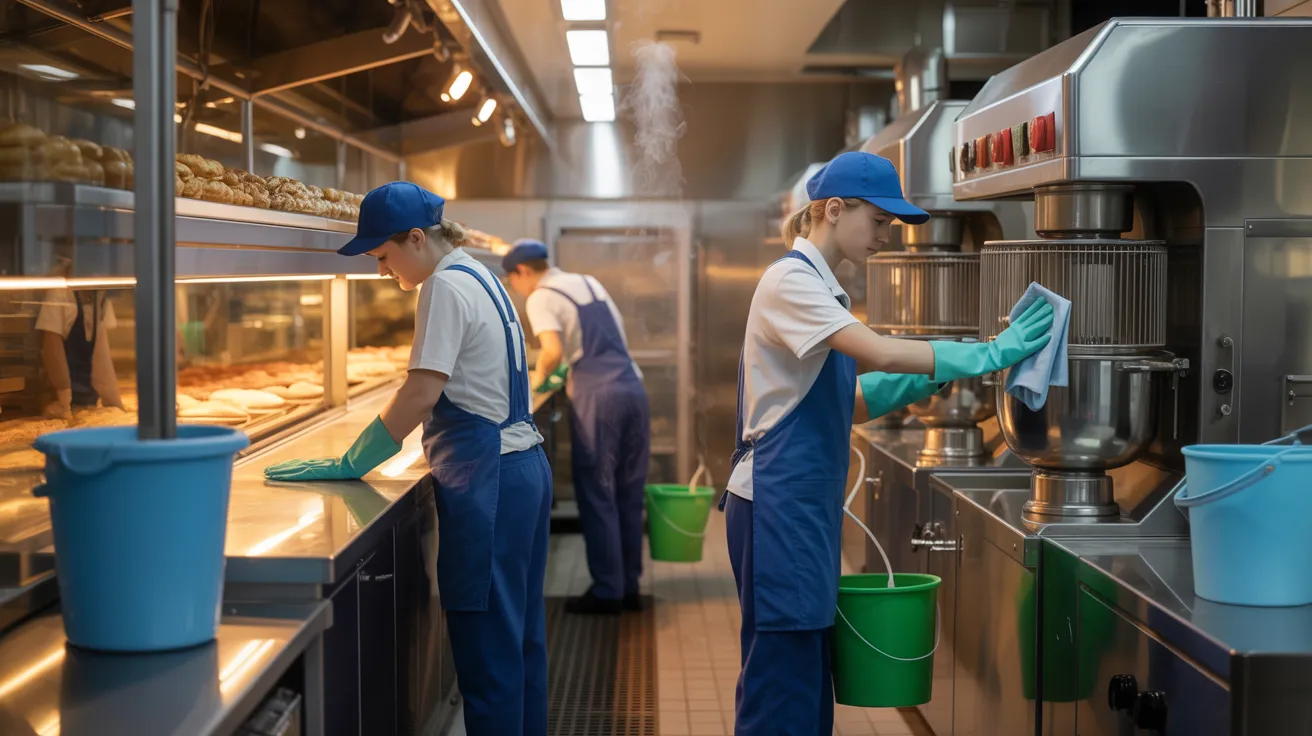
Your business requires regular cleaning scheduled according to potential hazards, food processing capacity, allergen concerns, and regulatory checks, combined with documented records supporting food safety protocols, regulatory audits, and government health requirements. The information below detail essential sanitation program components.
Important Highlights
- Brampton's sanitation specialists support restaurants, grocery departments, commissaries, warehouses, bakeries, schools, mobile vendors, and allergen-sensitive operations.
- Cross-contamination reduction is achieved by disinfecting frequently contacted areas, food-contact equipment, kitchens, floors, drains, restrooms, and storage areas with sectional methods.
- Certified contractors verify approved sanitizer dilution, suitability, and exposure duration, then record finishing with swabs, inspections, and remedial documentation.
- Sound hygiene schedules factor in danger, production rate, transitions, incidents, and regulations when allocating routine, recurring, and annual activities by section.
- Coverage, color-categorized implements, hazard analysis knowledge, sanitation understanding, safety training preparation, endorsements, and compliance-ready hygiene paperwork are critical supplier characteristics.
What Brampton Facilities Require Food Safety Cleaning?
Food safety cleaning is mandatory for any Brampton facility that processes, stores, prepares, packages, or serves food. Apply it to your business if it falls within public health review, food regulations, or HACCP protocols. This includes food service venues, employee dining, supply facilities, retail sections, butcheries, seafood counters, retail shops, and facility kitchens.
Proper sanitation protocols is furthermore needed in warehouses, food manufacturing plants, cold storage sites, retail bakeries, school nutrition programs, banquet halls, and meal delivery hubs. Mobile and temporary establishments apply similarly, like catering trucks, festival vendors, and pop-up food booths. Your location demands documented cleaning protocols when your workers handle raw materials, divide prepared foods, warm meals, or maintain allergen storage. In Brampton, sanitation remains not elective; it constitutes statutory, functional, and public health standards.
What Do Brampton Cleaning Experts Clean?
Your facility requires professional cleaners who disinfect frequently contacted surfaces, kitchens, all floor types, and toilet facilities to maintain food safety compliance and public health standards. These zones receive attention because they represent the most significant contamination risk, trip and slip dangers, and breaches of sanitation codes.
If you grasp what they sanitize, you'll successfully ensure your operation satisfies all operational and regulatory compliance needs.
Addressing High-Touch Surface Disinfection
Brampton cleaning providers stress high-touch surface sanitizing given the potential of bacteria, viruses, and food residue transmitting across the location. You must have a documented schedule for cleaning door handles, push plates, switches, railings, shared equipment controls, POS terminals, and refrigerator pulls. Applying touchpoint mapping, experts determine every frequently handled surface and set cleaning intervals
Maintaining a directional workflow, changing cleaning materials, and organizing sanitization equipment by location ensures that protocol stays measurable, justified, and ready for inspection consistently
Kitchen Areas, Floor Surfaces, and Bathroom Spaces
Professional cleaners in Brampton concentrate on kitchens, floors, and restrooms given that each location involves specific food safety, falling hazards, and health code requirements. In industrial kitchens, you need degreasing on cook lines, equipment exteriors, drains, prep surfaces, and splash zones to minimize bacterial growth and pest activity.
Documented floor maintenance is likewise provided as part of the service.
Restroom cleaning requires disinfecting touch areas, bathroom equipment, stall barriers, supply stations, and bins, replacing items and managing smells. They also service restaurant moprooms, where chemical storage, sink hygiene, and drainage conditions can affect sanitation compliance and staff safety daily.
The Importance of Food Safety Cleaning in Brampton
In Brampton, you must copyright sanitary cleaning practices to meet health code requirements and pass inspections. You also reduce bacterial spread through proper cleaning of food-preparation surfaces, appliances, and frequently-touched items. Most importantly, you safeguard community wellness by reducing the chance of food poisoning in your establishment.
Health Code Compliance
Food establishments in Brampton face stringent health requirements, making food safety cleaning essential to fulfilling health code requirements, ensuring the safety of patrons, and eliminating enforcement action. You must maintain hygienic food handling zones, recorded sanitation plans, appropriate product handling, and documented employee protocols that align with municipal and provincial inspection expectations.
When inspectors review your operation, they determine whether your cleaning program supports secure product handling, equipment sanitation, waste handling, and facility cleanliness.
Cross-Contamination Prevention
Following regulatory requirements depends on your skill in stopping cross-contamination in daily food handling and cleaning. You must separate raw ingredients from ready-to-eat foods, sanitize prep surfaces between tasks, and store chemicals away from food-contact items. Clear procedures reduce transfer risks and support consistent compliance during inspections.
You should establish allergen separation to prevent major allergens from touching common work areas, storage bins, or tools. Use dedicated cutting boards, color-coded tools, and strict utensil labeling so staff don't mix items during preparation or service. Require handwashing after handling uncooked proteins, shellfish, egg items, or allergen products. Change cleaning rags frequently, and verify sanitizer strength with test strips. When you train staff to follow these controls every shift, you build a more hygienic, secure workplace that meets Brampton's food safety expectations consistently.
Public Health Protection
If proper sanitation declines, you don't merely risk a failed inspection—you boost the probability of pathogenic contamination harming customers, staff, and the broader Brampton region. You also undermine your responsibility in protecting public health, especially in high-traffic food premises where pathogens travel quickly through surfaces, equipment, and touchpoints.
You require cleaning protocols that remove contaminants, disinfect appropriately, and confirm results. This involves maintaining exposure durations, selecting approved disinfectants, documenting procedures, and coaching employees to meet regulatory requirements. These controls promote illness spread by decreasing microbial counts before contaminating food or hands. Throughout Brampton, strong cleaning protects vulnerable communities, minimizes disease potential, and demonstrates accountability. When you follow proper protocols, you exceed regulations—you mitigate risk and enable safer food service region-wide.
Why Is Cleaning Essential for Food Safety Compliance?
Committing to rigorous cleaning routines solidifies food safety compliance by decreasing contamination threats, preventing pathogen multiplication, and keeping your facility aligned with sanitation requirements under HACCP-based programs and public health regulations. You verify that food-handling surfaces stay visibly clean and microbiologically controlled, backing documented preventive controls and inspection readiness.
Effective cleaning also reinforces allergen management by extracting residues that can trigger undeclared allergen exposure. by eliminating residues that can cause undeclared allergen exposure.
How Ought You Schedule Commercial Cleaning Services?
cleaning routines or between production runs wherever surfaces contacting food, bathroom facilities, and high-touch areas
Drains, ventilation systems, storage racks, and difficult-to-access areas call for every week or monthly service, guided by inspection findings and sanitation records.
What Should You Look For in Brampton Cleaning Experts?
Start by screening providers against food-safe sanitation requirements, not cost only. You should verify that each company understands CFIA, public health, and HACCP-aligned expectations relevant to your facility. Ask for proof of insurance, WHMIS compliance, documented staff training, and supervision practices. Review whether technicians understand contamination prevention, chemical handling, and traceable sanitation records.
You should further examine operational reliability and accountability. Request references from food facilities in Brampton, then review response times, corrective-action procedures, and communication protocols. Validate the company supports supplier audits and can present inspection-ready documentation to authorities or third parties. Confirm equipment is maintained, colour-coded tools are applied correctly, and facility-specific risks are identified. A qualified provider protects compliance, product integrity, and your reputation in the market.
What does a Food Safety Cleaning Plan consist of?
Document a framework that defines every sanitation activity, guideline, and role before starting production. You should record cleaning schedules, approved products, ratios, contact periods, tools, and validation approaches for each area, surface, and device. Remember to add pre-operational inspections, corrective actions, and employee training requirements.
Your plan should also cover cross-contamination prevention, waste disposal, pest management measures, and scheduled documentation for bathrooms, drainage, ground surfaces, and food-handling zones. Specify how you'll separate raw and ready-to-eat processes, help with ingredient tracking, and copyright accurate allergen labeling through validated cleaning between product changes. You should establish accountability, maintain signed records, and check results against regulatory standards, HACCP controls, and customer requirements. When gaps appear, adjust procedures immediately and retrain staff.
Frequently Asked Questions about the Plan
Will sanitation providers handle overnight shifts at Brampton facilities?
Yes, you can schedule cleaning services to support nighttime operations in Brampton facilities. You'll arrange nighttime cleaning around operational schedules, security measures, and staffing requirements. Providers typically map overnight procedures to minimize interruption, maintain compliance, and document completed tasks. You should verify arrival timeframes, supervision, access protocols, and waste handling before service begins.
Are hazard containment services available from sanitation professionals?
Yes, you can locate Brampton sanitation experts providing spill response options. They manage contamination, evaluate risks, isolate contamination, and initiate rapid cleanup to reduce risk and prevent business disruption. You should verify response rates, certifications, PPE measures, and disposal methods. If your facility must meet compliance standards, select a service that documents events, follows procedures, and ensures audit compliance.
Can environmentally safe disinfectants be applied securely on food-contact surfaces?
Absolutely, plant-based sanitizers can be suitable for surfaces contacting food when you opt for products labeled food safe and satisfying regulatory requirements. You must confirm contact times, concentration levels, and rinse requirements before use. Botanical formulations lower chemical hazards, though you still need proof of efficacy against relevant pathogens. For ensuring residue-free conditions, adhere to manufacturer directions precisely and validate the sanitizer satisfies food industry regulations.
Can cleaning plans flex with seasonal shifts?
Without question, cleaning schedules customize readily for production fluctuations. Adapt intervals, staff levels, cleaning agents, and testing procedures to fit seasonal associated resource patterns while sustaining compliance standards. Reduce production downtime by planning sanitation around equipment transitions, maximum output, and usage patterns. Additionally revise procedural documents, staff education, and monitoring protocols to account for temporary risks, novel allergens, or increased soiling. Periodic assessments preserve the strategy current.
Will commercial cleaners teach your staff on sanitation best practices?
Absolutely, professional cleaning companies frequently provide employee education on sanitation best practices. Your staff receives instruction on correct chemical handling, contact times, cross-contamination prevention, machine takedown, and documentation. They typically align instruction with HACCP, GMP, and CFIA or regional health authority requirements. Many conduct sanitation audits to ensure adherence, pinpoint weaknesses, and strengthen corrective measures. This helps you maintain consistent procedures, clear audits, and reduce food safety risks consistently.
Conclusion
Partnering with Brampton commercial cleaning and food safety professionals means more than cleaning—it ensures your facility meets inspection standards and your standards are defensible. From kitchen areas to production zones, each sanitized surface and organized section lessens contamination risk and avoids costly disruptions. By scheduling maintenance on appropriate schedules and executing a comprehensive cleaning strategy, you protect your workforce, clients, and your reputation. In a tightly controlled market, sanitary conditions are non-negotiable—they're vital to proper management.